
Why We Made a Garnet Engagement Ring That Doesn’t Wait for October
-
9 月, 23, 2026
We Were Tired of the Same Three Stones
We make jewelry. And every time we browse the engagement ring market, we see the same thing: diamond, diamond, diamond. Maybe sapphire if you’re feeling adventurous. Maybe ruby if you’ve got the budget.
We wanted to make a garnet engagement ring that actually stands on its own — not as a budget alternative, not as a placeholder, but as a stone worth building a ring around.
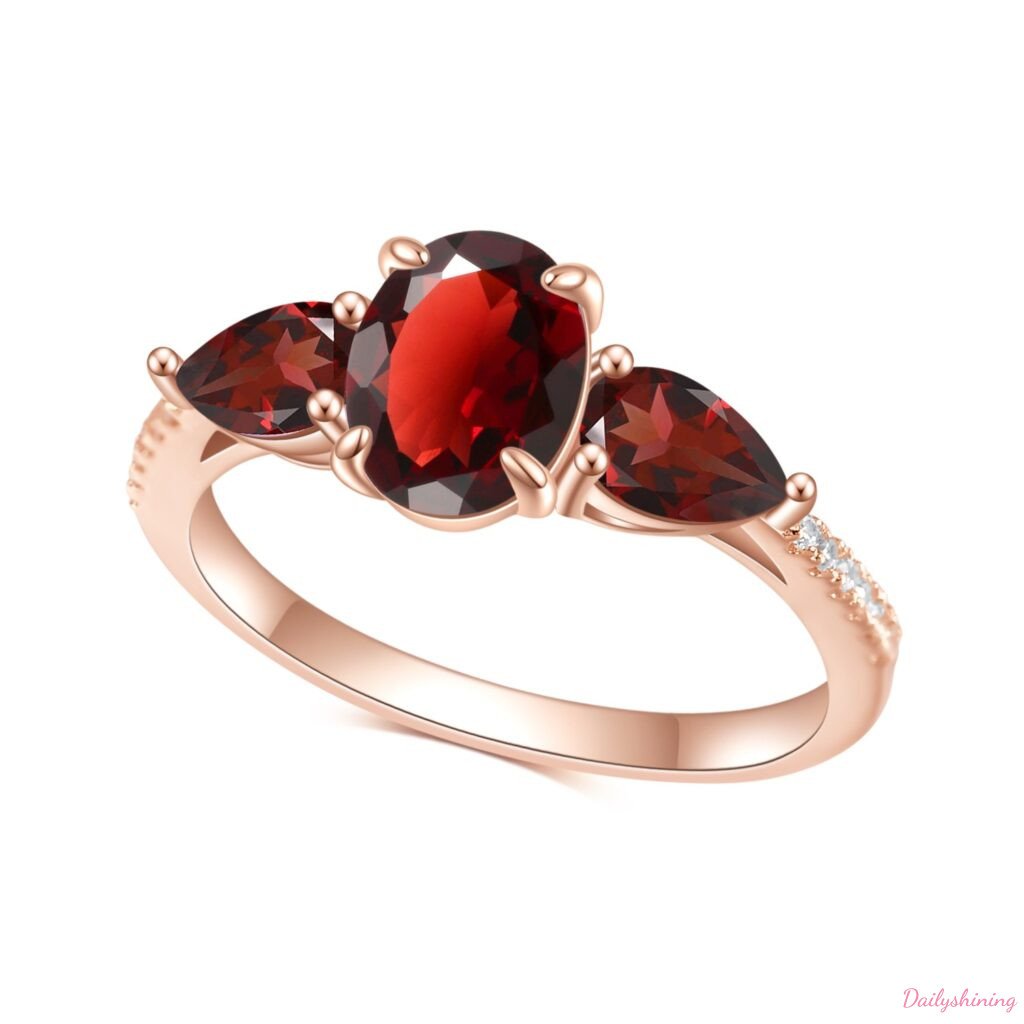
So we built this piece. A deep red garnet in a three-stone setting, with pear-shaped side stones and a rose-gold finish. It’s not for everyone. But if you’re looking for a garnet engagement ring that feels intentional instead of accidental, this might be the one.
The Design: Why We Chose Three Stones Instead of One
Let’s talk about what you’re actually looking at.
The center is an oval-cut natural garnet — deep red, with a richness that changes depending on the light. In daylight it reads as a warm brick red. Under evening light it goes darker, almost like wine. This is what garnet does. It’s not a static stone.
Flanking it are two pear-shaped garnets, angled outward. The three-stone layout is one of the oldest engagement ring formats for a reason: it draws the eye to the center, then lets the side stones frame it. We chose pears instead of rounds because the points add a subtle directionality — the ring feels like it’s moving, not sitting still.
The band is S925 sterling silver with a rose-gold finish, and the shoulders are set with a small cluster of white accent stones. Not a full pavé band — just enough to catch light without competing with the garnets.
The whole thing sits low on the finger, which matters if you’re actually going to wear this daily and not just for photos.
We Started With a Real Stone, Not a Cheap Imitation
When you shop for a garnet engagement ring, the stone is where most brands cut corners. Glass. Synthetic spinel. Dyed quartz. They photograph well and cost almost nothing — and they look flat the moment you see them in person.
We chose natural garnet.
The Color: Garnet gets its red from iron and other trace elements during formation, not from a coating. That means the color won’t fade or chip off over time. It’s part of the stone.
The Cut: We use an oval cut for the center and pear cuts for the sides because they throw light across more of the stone’s surface than a round cut of the same carat weight. More facets catching light means more depth on the hand.
The Setting: Each stone is held in a four-prong setting, which keeps the garnet visible from every angle. You’re not buying a ring where the metal hides the stone.
We don’t hide what these are. They’re natural garnet, not ruby. But a well-cut garnet in a good setting will outshine a low-grade ruby every time — at a fraction of the cost.
The Real Reason These Don’t Fade: Our Patented XD6 6-Layer Plating
This is the part we’re proudest of, and the part most garnet engagement ring brands won’t talk about.
The Industry’s Dirty Little Secret
Most affordable rings use single-layer flash plating — one thin coat of metal over a base alloy. It’s cheap and fast. It also means that within a few months of normal wear, sweat, perfume, and humidity eat through that one layer. What’s underneath shows through, and it isn’t pretty.
What We Did Instead
We developed — and patented — the XD6 6-layer electroplating process.
Instead of one coat, we apply six distinct layers, each with a specific job. Here’s exactly what’s on your ring, from the inside out:
Layer 1 & 2: Silver — This is the base. Two layers of silver sit closest to your skin. Silver is naturally skin-friendly and hypoallergenic, so even sensitive skin can wear this all day without irritation. Starting with silver also gives every layer above it a smooth, even foundation to bond to — which is why the finish doesn’t flake or peel.
Layer 3: Palladium — Palladium is highly resistant to oxidation. Think of it as a bulletproof vest for the silver underneath — air and sweat simply can’t get through. This is the layer that does the heavy lifting against tarnishing.
Layer 4: Gold — This layer adds brightness and further oxidation resistance. It’s what gives the ring its warm rose-gold tone instead of a flat, greyish finish. It also reinforces the barrier, so even if the outer layers take daily abuse, the gold underneath keeps the color true.
Layer 5: Silicon Dioxide (SiO₂) — This layer is for wear resistance. Silicon dioxide is extremely hard, so daily bumps, knocks, and scratches against clothing or surfaces won’t leave marks. It’s the reason the surface stays smooth instead of picking up a scratched, cloudy look over time.
Layer 6: Self-Cleaning Hydrophobic Film — This is the most interesting one. It mimics the surface structure of a lotus leaf — the same reason water beads up and rolls off a lotus instead of soaking in. When you touch it, it feels slightly smooth. Sweat, dust, and oils don’t stick easily. After wearing it, just wipe with a soft cloth and it’s clean.
What That Means for You in Practice
3 to 5 years of shine with normal care — not months.
No green or black marks on your skin, because the base metal never touches your finger.
Resistance to daily moisture — hand washing, humidity, light perspiration. (We still recommend taking it off before swimming or showering, as you would with any fine jewelry.)
Easy upkeep — a quick wipe is usually all it needs.
We’re not claiming this ring is indestructible. We’re claiming it’ll outlast almost everything else you’ve bought at this price point — and we stand behind that.
The Details, Because You Deserve to Know Exactly What You’re Getting
Main Stone: Natural Garnet, Oval Cut
Side Stones: Natural Garnet, Pear Cut (two)
Accent Stones: High-grade white cubic zirconia
Metal: S925 Sterling Silver
Finish: Patented XD6 6-layer electroplating (rose gold tone)
Setting: Four-prong, three-stone layout
Sizing: Available in standard US sizes
Weight: Lightweight, comfortable for all-day wear
One note we always give our customers: because garnet is a natural stone, the depth of red varies slightly from ring to ring. That’s not a flaw in manufacturing — it’s the signature of a real stone.
How We’d Style It
A few pairings we love, from our own team:
Everyday: A white tee and denim. The deep red adds a quiet pop of color without being loud.
Evening: A little black dress. Garnet against black is one of the most striking combinations in jewelry — and the pear side stones sparkle convincingly under low light.
Stacked: Worn next to a thin gold band or a plain silver ring. The contrast in tone makes both pieces look more intentional.
Who This Garnet Engagement Ring Is For
We’ll be honest about who should skip it: if you want a traditional diamond solitaire, this isn’t it. It’s bold, it’s warm, and it’s not trying to blend in.
But if you:
Want a garnet engagement ring that feels intentional instead of accidental;
Love deep red stones but are tired of the same three options;
Want something that looks like fine jewelry without the fine jewelry price;
Are tired of rings that turn green or black after a few months;
Then this was made for you. The XD6 plating isn’t a marketing line to us. It’s the reason we can confidently tell you this ring will still look good in three to five years, when the cheap ring you almost bought would be in a drawer, tarnished and unwearable.
See the full specs and current pricing here:
👉
Garnet Ring – 925 Silver Rose Gold Plated Three-Stone
